15kVA 3 Phase Online UPS: Features and Applications
A 15kVA three-phase UPS can be a suitable option for facilities that need backup power for servers, network equipment, or industrial controls. Before selecting a model, it is worth checking the power demand, voltage requirements, and backup time needed for the connected equipment.
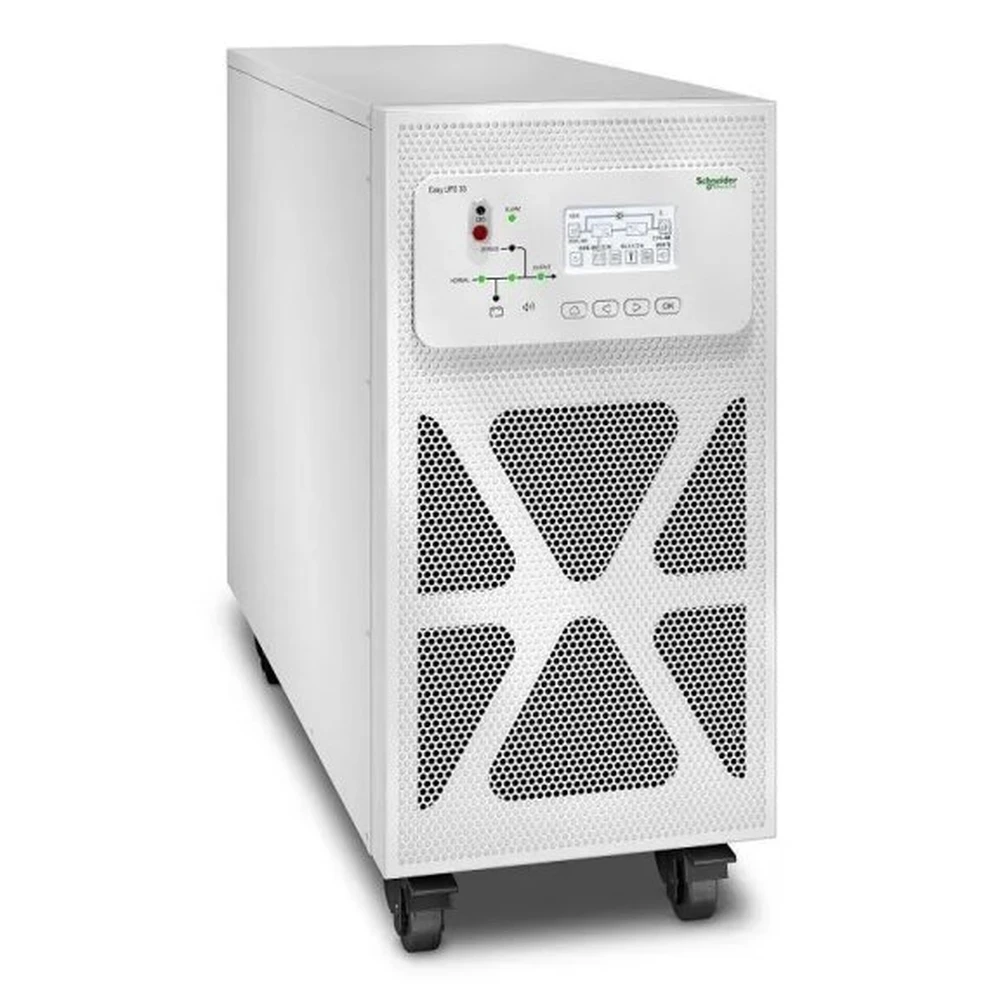
For businesses evaluating a 15kVA UPS, the APC Easy UPS 3S E3SUPS15KH offers a specific combination of features: a 15kVA/15kW rating, online double conversion technology, an external battery system, and support for parallel operation with up to six units. Understanding these specifications helps purchasing teams determine whether the model fits their power protection requirements.
1. Is a 15kVA 3 Phase UPS Right for Your Power Requirements?
A 15kVA three-phase UPS is worth considering when a facility needs to protect selected equipment connected to a three-phase electrical supply. However, the appropriate capacity depends on the actual load and the electrical requirements of the installation.
Understanding the 15kVA/15kW Rating
One important specification to check when selecting a UPS power supply is the relationship between apparent power, measured in kVA, and real power, measured in kW.
The APC Easy UPS 3S E3SUPS15KH has a rated capacity of 15kVA/15kW and a power factor of 1.0. This means its rated apparent power corresponds to 15kW of real power.
For buyers, the practical consideration is whether the total power demand of the connected equipment remains within the UPS’s rated capacity. The load assessment should also account for equipment that may be added later and any relevant operating requirements.
A 15kVA rating alone does not establish suitability for every server room or industrial application. The connected load, required power quality, and electrical configuration must all be considered.
Checking Three-Phase Voltage Compatibility
The E3SUPS15KH supports input voltages of 380V, 400V, and 415V, with three-phase input and neutral. Its output supports 380V, 400V, and 415V in a three-phase configuration.
These options allow the unit to be evaluated for installations using the corresponding electrical supply. Before purchasing, confirm the site’s available voltage and the requirements of the equipment that will connect to the UPS.
This check is particularly relevant when replacing an existing unit or integrating a new UPS into an established electrical system. A suitable power rating does not compensate for an incompatible input or output configuration.
2. Key Features That Matter in a 15kVA Online UPS
Beyond capacity and voltage, several specifications of the E3SUPS15KH deserve closer attention during project planning.
Online Double Conversion for Critical Loads
An online double conversion UPS converts incoming AC power to DC and then back to AC to supply connected equipment. This topology is commonly considered for applications where power continuity and output supply quality are important.
The E3SUPS15KH uses online double conversion technology. Its suitability depends on the needs of the connected load and the electrical requirements of the installation.
For businesses comparing an online UPS with other UPS topologies, the operating method is an important distinction. Rather than selecting a unit based on its power rating alone, buyers should consider whether its topology is appropriate for the equipment being protected.
Online Efficiency and ECO Mode
Operating efficiency can affect the energy consumed by a UPS over time. For facilities running power protection equipment continuously, even differences in efficiency may be relevant to long-term operating costs.
The E3SUPS15KH specifies efficiency of up to 96% in online double conversion mode and up to 99% in ECO mode. These are maximum figures rather than guaranteed efficiency levels under every load condition.
When comparing UPS models, buyers should consider which operating mode will be used and whether its characteristics suit the site’s power protection requirements. ECO mode’s higher stated efficiency should not be treated as a substitute for evaluating the requirements of the connected equipment.
External Battery Configuration and Backup Planning
Battery configuration is a key consideration for any UPS backup power system. The required backup time depends on the connected load and the selected battery arrangement, so it cannot be determined from the UPS’s kVA rating alone.
The E3SUPS15KH is supplied without internal batteries and uses an external battery system. This means the battery arrangement must be addressed separately when planning the complete installation.
Before selecting the system, buyers should establish how long critical equipment needs to remain powered during an outage and confirm the compatible battery configuration. The available product information does not specify a fixed backup duration, so runtime should be verified against the actual battery setup and load.
Parallel Operation for Capacity or Redundancy
The E3SUPS15KH supports parallel operation with up to six units for capacity expansion or redundancy. This feature may be relevant to projects where the power protection arrangement needs to accommodate additional demand or a planned redundancy configuration.
However, parallel capability does not automatically mean that every installation requires multiple UPS units. The appropriate arrangement depends on the project’s load, availability requirements, and supported configuration.
Businesses considering future expansion should confirm the manufacturer’s requirements for parallel operation before finalizing the system design.
Installation Space and Environmental Protection
Installation constraints can influence UPS selection, particularly in server rooms and technical areas where floor space is limited.
The E3SUPS15KH measures 250 × 700 × 530mm and has a net weight of 36kg. These specifications help facility planners assess the available installation space and handling requirements.
The unit also includes replaceable dust filters and conformal coating on its internal PCBA boards. These features are relevant when evaluating the installation environment, although the site must still meet the manufacturer’s operating requirements.
Its IP20 ingress protection rating should also be considered when assessing where the equipment can be installed.
3. Where Can the APC Easy UPS 3S 15kVA Be Used?
The E3SUPS15KH can be evaluated for several applications that require three-phase power protection. In each case, suitability depends on the connected equipment and site conditions.
Small Data Centers and Server Rooms
Server rooms and smaller data center installations may need to protect servers, network equipment, and other selected IT loads against power interruptions.
For these projects, the E3SUPS15KH’s 15kVA/15kW rating provides a clear starting point for load assessment. Its external battery arrangement also allows the battery configuration to be planned as part of the overall installation.
Purchasing teams should compare the calculated load with the UPS capacity, establish the required backup time, and review the available monitoring interfaces before choosing a system.
Telecommunications Equipment
Communication facilities may use UPS systems to support selected network equipment and other critical electrical loads. The E3SUPS15KH’s three-phase input and output configuration makes voltage compatibility an important part of the assessment.
Its LCD panel and communication interfaces can also be considered when planning equipment monitoring. The unit supports RS485, USB, and dry contacts, with an optional SNMP card for remote monitoring through EcoStruxure IT.
The final choice should reflect the site’s electrical configuration and the specific power requirements of its communication equipment.
Industrial Control Systems
Industrial facilities may require power protection for selected automation controls, sensors, and related electrical equipment. In these environments, the operating conditions are as important as the rated capacity.
The APC UPS includes replaceable dust filters and conformal coating on its internal PCBA boards. These features can be relevant when evaluating the installation environment, but they do not remove the need to check temperature, humidity, dust exposure, and other site requirements against the manufacturer’s specifications.
Commercial Facilities
Commercial buildings may use a UPS to support selected security systems, critical controls, and other equipment that needs backup power.
For these applications, buyers should identify which loads require protection, confirm their voltage requirements, and establish the necessary backup time. This helps determine whether a 15kVA three-phase system is appropriate for the intended installation.
4. What to Check Before Selecting the E3SUPS15KH
Before specifying the APC Easy UPS 3S E3SUPS15KH, purchasing teams and project engineers should review several practical requirements.
- Connected load: Confirm the total power demand and ensure that the selected capacity meets the installation’s needs.
- Input and output voltage: Verify compatibility with the site’s three-phase electrical supply and connected equipment.
- Battery arrangement: Confirm a compatible external battery system and establish the required backup duration.
- Operating mode: Compare the requirements of the connected equipment with the intended online or ECO operating mode.
- Expansion plans: Determine whether the project needs parallel operation for additional capacity or redundancy.
- Installation conditions: Check the unit’s dimensions, weight, IP20 rating, ventilation requirements, and environmental limits.
- Monitoring requirements: Decide whether the local LCD panel and standard interfaces are sufficient or whether an optional SNMP card is needed.
These checks help buyers evaluate the complete installation rather than comparing UPS models solely by price or rated capacity.
5. APC Easy UPS 3S E3SUPS15KH: Technical Specifications
The following specifications summarize the main details relevant to product evaluation.
| Specification | Technical Detail |
| Model | E3SUPS15KH |
| Rated capacity | 15kVA / 15kW |
| Power factor | 1.0 |
| Topology | Online double conversion |
| Input voltage | 380V / 400V / 415V, three-phase plus neutral |
| Input frequency | 40–70Hz |
| Output voltage | 380V / 400V / 415V, three-phase |
| Maximum efficiency | Up to 96% online / 99% ECO mode |
| Overload capacity | 125% for 10 minutes / 150% for 1 minute |
| THDI | Less than 3% at full load |
| Battery configuration | External battery system |
| Dimensions | 250 × 700 × 530mm |
| Net weight | 36kg |
| Noise level | ≤60dB |
| Ingress protection | IP20 |
| Communication | RS485, USB, dry contacts, optional SNMP |
| Parallel operation | Up to six units |
Conclusion
Selecting a 15kVA three-phase UPS requires a clear understanding of load demand, voltage compatibility, backup requirements, and the conditions in which the equipment will operate.
The APC UPS 3S E3SUPS15KH combines a 15kVA/15kW rating, online double conversion technology, up to 96% efficiency in online mode, an external battery system, and support for parallel operation with up to six units. Its replaceable dust filters, PCBA conformal coating, and communication options provide additional factors to consider when evaluating it for business power protection projects.
If you need help evaluating the APC Easy UPS 3S E3SUPS15KH for your project, please contact us to discuss your power requirements, battery configuration, and installation conditions.
Frequently Asked Questions
1. What is a 15kVA 3-phase UPS used for?
A 15kVA 3-phase UPS provides backup power and power protection for equipment such as servers, network devices, industrial control systems, and other critical electrical loads. Its suitability depends on the equipment’s power demand and the required backup time.
2. What is the difference between an online UPS and a double-conversion UPS?
An online double-conversion UPS continuously converts incoming AC power to DC and then back to AC to supply connected equipment. This process helps isolate the load from many input power disturbances and provides a stable output supply.
3. How long can a 15kVA UPS provide backup power?
The backup time of a 15kVA UPS depends on the connected load, battery capacity, and battery configuration. A higher load generally reduces runtime, so the required backup duration should be considered when selecting an external battery system.