High-Capacity UPS for Data Centers: Understanding 500kW to 1000kW Solutions
As data centers grow in computing density, their power infrastructure must handle larger and more continuous electrical loads. At the 500kW to 1000kW level, choosing a UPS is no longer simply a matter of selecting enough capacity. Buyers also need to consider conversion efficiency, system architecture, redundancy, battery technology, monitoring, and how easily the system can be tested and maintained.
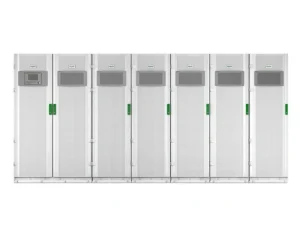
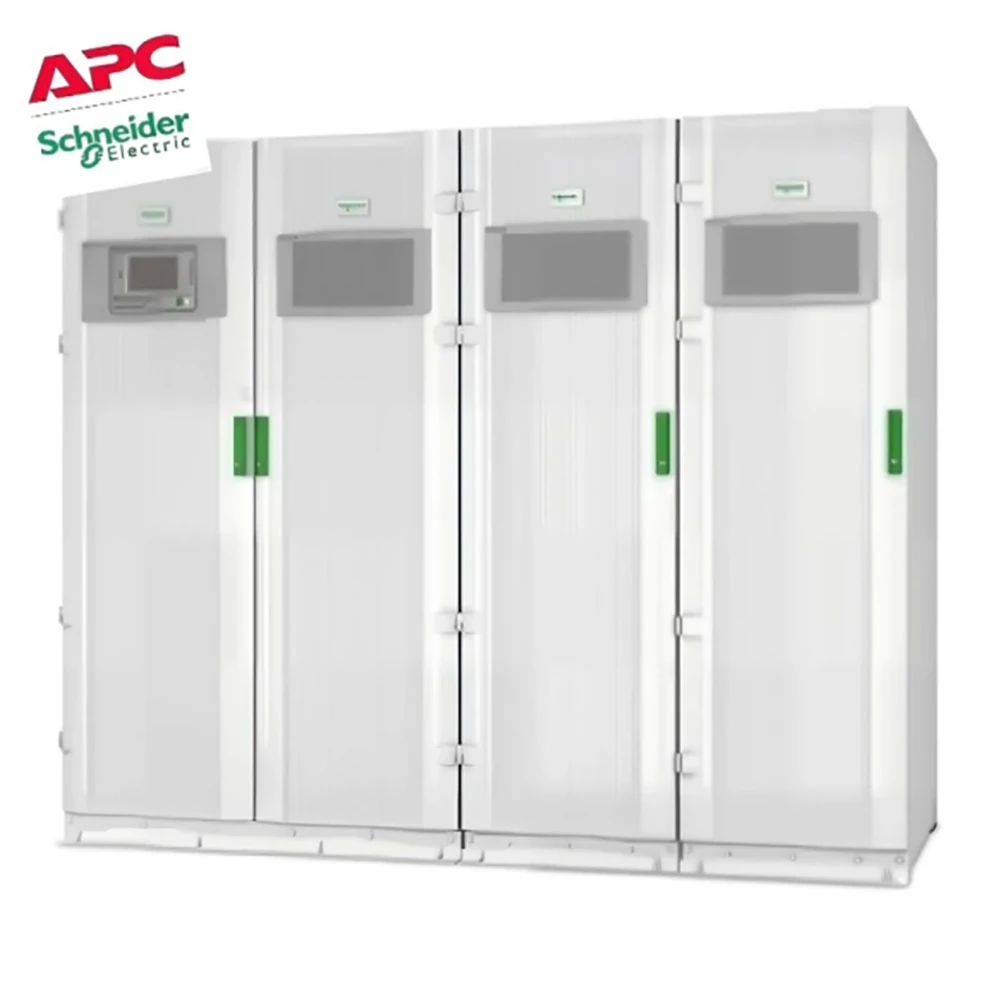
These factors directly affect how a data center UPS operates under normal and abnormal power conditions. The Schneider Galaxy VX UPS addresses these requirements through a 250kW modular power architecture, 4-Level IGBT inverter technology, multiple operating modes, and support for different energy-storage options.
What Should You Consider When Choosing a High-Capacity UPS?
Power Capacity and Load Requirements
The first step is to match UPS capacity with the actual electrical load rather than selecting a model based only on the size of the facility. A system that is significantly oversized can leave capacity underused, while insufficient capacity can limit future expansion.
Galaxy VX uses 250kW power cabinets and supports 500kW, 750kW, and 1000kW configurations. This gives buyers a clear capacity structure when planning a large UPS installation. Its output power factor is 1.0, meaning the rated kVA and kW values are equivalent. For example, a 500kW configuration corresponds to 500kVA under this specification, which makes capacity calculations more straightforward when comparing a 500kVA UPS with other systems.
Efficiency and Operating Mode
Efficiency becomes more significant as UPS capacity increases because the system is processing a large amount of power continuously. Energy lost during conversion also becomes heat that must be managed by the facility.
Galaxy VX reaches up to 99% efficiency in ECOnversion™ mode and up to 97% in double-conversion mode. The two operating modes give buyers a way to balance energy efficiency with the level of continuous power conditioning required by the load. Double-conversion mode provides a high-quality sine-wave output for sensitive industrial loads, while ECOnversion™ is intended for operation where higher efficiency is a priority.
Redundancy and Battery Options
High-capacity UPS systems for data centers also need to account for what happens if a power module or battery system requires attention. Galaxy VX supports N+1 internal redundancy, providing an additional power module within the system architecture beyond the capacity required for the protected load.
Battery selection is another consideration because backup duration, available space, and maintenance requirements can differ between facilities. Galaxy VX is compatible with lithium-ion, VRLA, and Ni-Cd batteries, giving buyers more flexibility when designing the energy-storage portion of the UPS system.
How Does the Galaxy VX Improve UPS Efficiency?
4-Level IGBT Inverter Technology
Galaxy VX uses a 4-Level IGBT inverter rather than a traditional 3-level design. The additional voltage level allows the inverter to control the power-conversion process with lower switching losses.
This matters because the inverter is continuously involved in converting and regulating power. Reducing losses in this stage helps limit the energy dissipated as heat and contributes to the system’s stated efficiency performance. For a high-capacity UPS, where hundreds of kilowatts may be processed, this becomes more meaningful than it would be in a small UPS installation.
ECOnversion™ and Double-Conversion Efficiency
Galaxy VX provides two different efficiency figures for its operating modes. ECOnversion™ mode can reach up to 99% efficiency, while double-conversion operation can reach up to 97%.
The distinction is useful when evaluating a modular UPS because operating requirements are not always the same throughout the facility. When the application requires continuous double-conversion protection, the system maintains up to 97% efficiency while providing a high-quality sine-wave output. When operating conditions allow ECOnversion™, the higher efficiency can reduce conversion losses and associated heat generation.
The Galaxy VX also maintains Class 1 power protection per IEC 62040-3 in ECOnversion™ mode.
What Monitoring, and Testing Options Are Available?
EcoStruxure™ IT and Communication Interfaces
Monitoring is another part of operating a large UPS system. Galaxy VX can integrate with EcoStruxure™ IT for 24/7 remote monitoring and predictive maintenance through cloud-based software.
The UPS also supports NMC, Modbus, RS485, and dry-contact communication interfaces. These options allow the UPS to exchange operating information with different monitoring or control systems, which is particularly relevant when the UPS forms part of a larger facility infrastructure.
Smart Power Test (SPoT)
Commissioning a high-capacity UPS traditionally requires careful load testing. Galaxy VX includes Smart Power Test (SPoT), which enables full-load testing onsite without a temporary load bank.
This can simplify the testing process because the commissioning team does not need to arrange a separate temporary load bank for the test. For a 500kW to 1000kW installation, avoiding additional temporary testing equipment can also make the commissioning process easier to organize.
Schneider Galaxy VX UPS Technical Specifications
| Specification | Galaxy VX |
| Power capacity | 500kW / 750kW / 1000kW |
| Power cabinet modularity | 250kW increments |
| Output power factor | 1.0 (kVA = kW) |
| Inverter | 4-Level IGBT |
| ECOnversion™ efficiency | Up to 99% |
| Online mode efficiency | Up to 97% |
| Nominal input/output voltage | 380V / 400V / 415V / 480V, 3-phase |
| Input voltage range | 340V–460V at 400V |
| THDI | <3% at full load |
| Operating temperature | 0°C to 40°C at full load |
| Redundancy | N+1 internal redundancy support |
| Communication | NMC, Modbus, RS485, Dry Contacts |
| Protection class | IP20 |
| Compliance | IEC 62040-1, IEC 62040-2, CE, TUV, RCM |
The specifications show where the Galaxy VX is positioned: it is a high-capacity three-phase UPS platform built around modular 250kW power blocks. The combination of a 1.0 output power factor, 4-Level IGBT inverter, and high efficiency figures is particularly relevant when the UPS is handling large continuous loads.
The input and communication specifications are also important during project planning. The supported voltage range covers several common three-phase configurations, while the available communication interfaces provide options for integration with facility monitoring and control systems.
Where Can a 500kW to 1000kW UPS Be Used?
Hyperscale Data Centers
Hyperscale data centers and cloud infrastructure can involve high-density server environments where a large amount of electrical power must remain available to IT equipment. A high-capacity UPS for data center applications therefore needs to address both the size of the load and the operating efficiency of the power-conversion system.
Galaxy VX provides 500kW, 750kW, and 1000kW configurations within the same 250kW modular architecture. This makes the platform applicable to large power-protection requirements where the required capacity falls within this range.
Industrial and Critical Infrastructure
The same capacity range can also apply to large industrial facilities and infrastructure projects. The supplied applications for Galaxy VX include automotive plants, semiconductor manufacturing, heavy engineering, large hospital campuses, centralized medical imaging departments, airports, railway signaling systems, tunnel ventilation, core banking systems, and global data centers.
These environments can have different load characteristics, but they share the need to protect substantial electrical loads. Galaxy VX’s combination of double-conversion operation, modular capacity, N+1 redundancy, and multiple battery options provides several configuration points for these projects.
Conclusion
Selecting a 500kW to 1000kW UPS requires more than matching the rated capacity to the facility load. Buyers also need to consider how the power architecture handles efficiency, redundancy, battery storage, monitoring, and commissioning.
The Schneider Galaxy VX addresses these requirements through 250kW modular power cabinets, 4-Level IGBT technology, up to 99% ECOnversion™ efficiency, up to 97% double-conversion efficiency, N+1 internal redundancy, and compatibility with lithium-ion, VRLA, and Ni-Cd batteries. Its EcoStruxure™ IT integration and SPoT testing capability extend the consideration beyond the UPS’s basic power-conversion function.
For data center and industrial buyers, these specifications provide a practical framework for comparing high-capacity UPS systems and determining which configuration fits the site’s current load and power-protection requirements.
Contact us for Galaxy VX UPS specifications, configuration support, and a project-based quotation.
FAQ
1. What UPS capacity options does the Schneider Galaxy VX support?
The Schneider Galaxy VX supports 500kW, 750kW, and 1000kW configurations based on a modular 250kW power cabinet architecture. This allows the UPS capacity to be matched to different large-scale data center and industrial load requirements.
2. What is the efficiency of the Schneider Galaxy VX UPS?
The Galaxy VX can achieve up to 99% efficiency in ECOnversion™ mode and up to 97% efficiency in double-conversion mode. The actual operating efficiency depends on the selected operating mode and system conditions.
3. What battery options are compatible with the Galaxy VX UPS?
The Galaxy VX supports lithium-ion, VRLA, and Ni-Cd battery systems. This gives project designers flexibility when selecting an energy-storage solution based on backup requirements, available installation space, and system configuration.