How to Choose a 1000VA UPS for Office and Network Equipment
Reliable power protection is important for businesses that depend on computers, network equipment, communication systems, and other electrical devices. Voltage fluctuations and unexpected power interruptions can affect equipment operation and interrupt daily business activities.
A UPS, or uninterruptible power supply, provides backup power when the main power supply is interrupted. Depending on its design and application, a UPS may also provide functions such as automatic voltage regulation, surge protection, battery monitoring, and communication.
For office and network applications with moderate power requirements, a 1000va ups can be a practical option. However, choosing the right UPS involves more than simply looking at the VA rating. Buyers should also consider the total equipment load, input voltage range, battery capacity, protection features, and monitoring requirements.
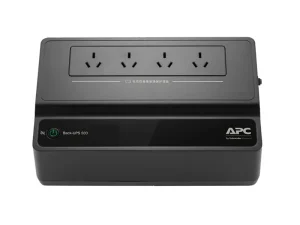
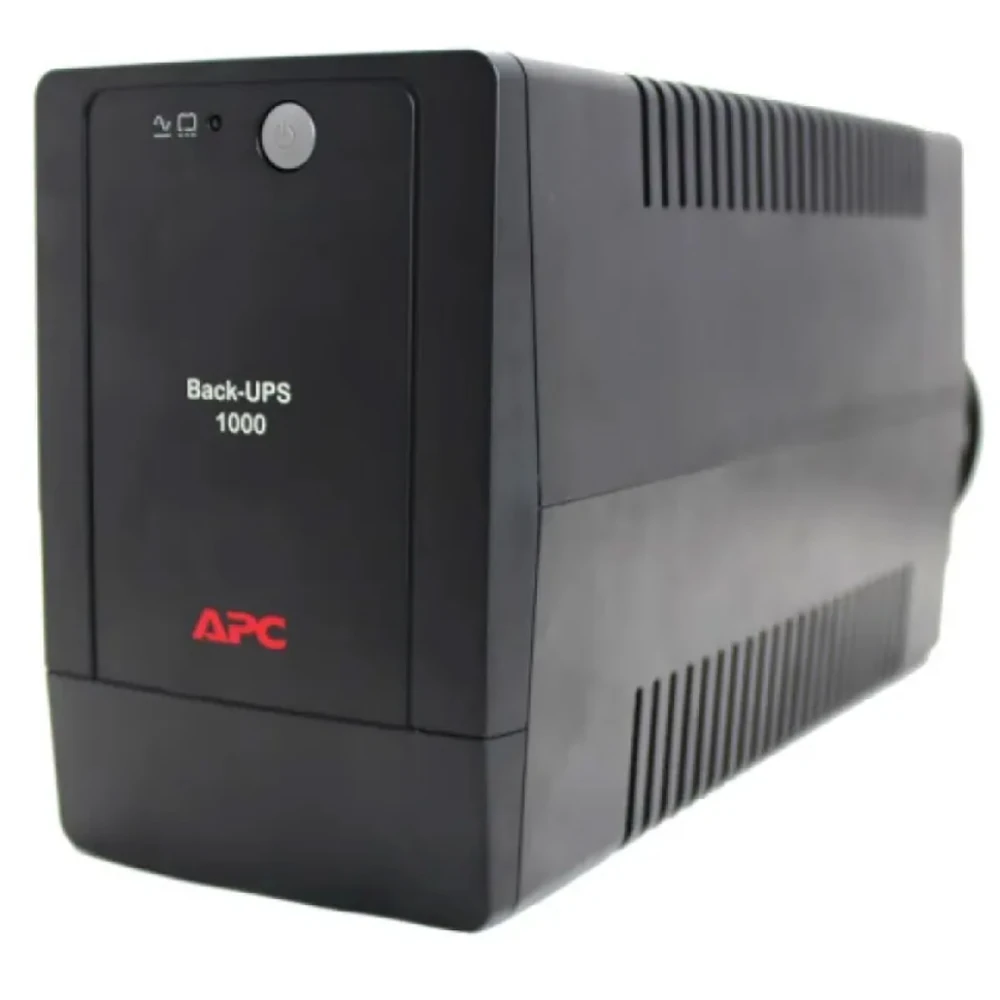
In this guide, we use the APC Back-UPS BP1000-CH as a practical example to explain what to consider when selecting a 1000VA UPS. By looking at the BP1000-CH’s specifications and features, buyers can better understand how capacity, voltage regulation, battery backup, protection, and communication functions relate to the actual requirements of a UPS application.
What Is a 1000VA UPS and Who Needs One?
The VA rating of a UPS indicates its apparent power capacity. A 1000VA model is designed for applications where the connected equipment requires a relatively moderate amount of power.
When selecting an ups 1kva, buyers should also look at its watt capacity. VA and watts are not always the same. For example, the APC Back-UPS BP1000-CH has a rated capacity of 1000VA/600W, with a power factor of 0.6.
This means buyers should consider both the UPS VA rating and the actual wattage required by the connected equipment.
A 1kVA UPS can be considered for applications such as:
- Office computers and monitors
- Network switches and routers
- Modems and communication equipment
- Small communication facilities
- Lighting systems
- Point-of-sale equipment
The appropriate capacity ultimately depends on the actual connected load rather than the UPS rating alone.
How to Determine the Right UPS Capacity
Before purchasing a 1kva ups, make a list of the equipment that needs backup power and determine its power requirements.
For example, if a business needs to protect computers, monitors, network devices, or other office equipment, the total load should be considered before selecting the UPS.
The BP1000-CH has a rated capacity of 1000VA/600W, which means its maximum specified output power is 600W. According to the product specifications, when the connected equipment uses the full 600W output, the UPS provides approximately 1 minute of backup time. If the connected equipment uses less power, the backup time may be different. Therefore, buyers should consider both the total power consumption of their equipment and the required backup time when choosing a UPS. For B2B procurement, it is useful to consider:
- Total connected load – Calculate the approximate power consumption of the equipment that will be connected.
- UPS capacity – Make sure the selected UPS has sufficient VA and watt capacity for the intended load.
- Required backup time – Determine whether the UPS is primarily needed for short-term power continuity or another specific operating requirement.
- Future equipment requirements – Consider whether additional devices may be connected later.
- Input voltage conditions – Check whether the UPS input voltage range is suitable for the local electrical environment.
This approach helps procurement teams select equipment based on actual requirements rather than VA rating alone.
Key Features to Consider When Choosing a 1000VA UPS
Once the required capacity has been established, buyers should compare the functions that affect power protection, operation, and maintenance.
Automatic Voltage Regulation (AVR)
Voltage fluctuations can create unstable operating conditions for electrical equipment. AVR helps address low-voltage conditions without immediately relying on the battery.
The BP1000-CH includes built-in Automatic Voltage Regulation (AVR). When the mains voltage drops below a safe level, the UPS can increase the output voltage to help equipment continue operating without unnecessarily draining the battery.
The model also provides adjustable sensitivity settings, allowing users to configure sensitivity according to the tolerance of different equipment.
Battery Capacity and Backup Time
Battery capacity is another important consideration when selecting a UPS. The BP1000-CH uses a built-in 12V/27Ah battery.
Its specified backup time at 100% load is 1 minute at the full 600W output, while the typical charging time is 4–6 hours to reach 90%.
For procurement teams, these specifications provide a clearer basis for evaluating whether the UPS meets the required backup needs.
Surge and Overload Protection
Power protection is not limited to battery backup. Electrical surges can also present risks to connected equipment.
The BP1000-CH provides 156 Joules of input surge protection against power spikes and lightning-related surges.
It also features a resettable circuit breaker. In the event of an overload or short circuit, the circuit can be restored using the push-button mechanism rather than replacing a fuse.
The UPS additionally includes over-temperature protection. An LED warning and continuous audible alarm are provided when the temperature becomes too high, and the unit can automatically shut down if the temperature reaches a critical level.
Communication and Monitoring
For business users, monitoring and management can be important, particularly when UPS units are deployed as part of office or communication infrastructure.
The BP1000-CH provides an RS232 communication interface. According to the product specifications, the interface supports power event monitoring, alarm settings, and power storage configuration through personal software management.
This allows users to monitor UPS-related events rather than relying only on the front-panel indicators or audible alarms.
Cooling and Operating Noise
The operating environment should also be considered when selecting a UPS for an office or communication facility.
The BP1000-CH uses a natural cooling, fanless design, with specified noise below 40dB. Its fanless configuration can be useful in environments where low operating noise is an important consideration.
Choosing a UPS for Computers and Office Equipment
A UPS for computer applications should be selected according to the combined power requirements of the computer and other connected equipment.
For businesses looking for a ups for computer applications, the BP1000-CH provides a 1000VA/600W capacity and four National Standard 10A output interfaces.
It can be used for PCs, monitors, and point-of-sale systems. Its AVR function can help address low-voltage conditions, while surge protection provides an additional layer of protection against input power spikes.
For office procurement, other practical features may also be relevant. The BP1000-CH includes automatic battery self-testing, audible alarms, and a battery connector handle designed to support safer transportation and easier initial setup.
Choosing a UPS for Network and Communication Equipment
Network and communication equipment can be particularly dependent on stable power because unexpected interruptions may affect connectivity and business operations.
The BP1000-CH is designed for applications including communication facilities. It can provide backup power for equipment such as network switches, routers, and modems during power interruptions.
Its 4–8ms switching time, AVR function, 156 Joules of surge protection, and RS232 communication interface provide several functions that can be considered when evaluating a UPS for network-related applications.
The exact UPS capacity should still be determined according to the total load of the connected network and communication equipment.
Why the APC Back-UPS BP1000-CH Is Suitable for These Applications
The APC Back-UPS BP1000-CH combines a 1000VA/600W output capacity with a built-in 12V/27Ah battery, AVR, surge protection, and RS232 communication.
Its main specifications include:
| Specification | BP1000-CH |
| Output Capacity | 1000VA / 600W |
| Power Factor | 0.6 |
| Input Voltage Range | 162–270V |
| Nominal Input Voltage | 220/230V |
| Frequency | 50/60Hz Adaptive |
| Output Waveform | Approaching a sine wave (Stepped) |
| Output Interfaces | National Standard 10A × 4 |
| Switching Time | 4–8ms |
| AVR | Built-in |
| Surge Protection | 156 Joules |
| Battery | 12V / 27Ah × 1 |
| Full-Load Backup Time | 1 minute at 600W |
| Charging Time | 4–6 hours to 90% |
| Communication | RS232 |
| Cooling | Natural cooling, fanless |
| Noise | <40dB |
| Net Weight | 7.8kg |
| Dimensions | 320 × 130 × 182mm |
The unit also achieves an operating efficiency of over 98% and is designed without additional input power factor or harmonic current distortion.
For businesses purchasing UPS equipment for office electronics, communication facilities, lighting systems, or other essential equipment, these specifications provide a practical basis for evaluating whether the BP1000-CH matches the application requirements.
Frequently Asked Questions
What does 1000VA mean on a UPS?
1000VA refers to the UPS apparent power capacity. However, buyers should also check the watt rating. The BP1000-CH is rated at 1000VA/600W, so both values should be considered when calculating the connected load.
Is a 1000VA UPS suitable for office computers?
A 1000VA UPS can be considered for office computers and related equipment when the total connected load is within the UPS’s rated capacity. The BP1000-CH is specified at 600W and is designed for PCs, monitors, and other business equipment.
How long can a 1000VA UPS provide backup power?
Backup time depends on the connected load. For the BP1000-CH, the specified backup time at 100% load is 1 minute at the full 600W output. Its typical charging time is 4–6 hours to 90%.
Conclusion
Choosing a 1000VA UPS requires more than comparing the VA rating alone. B2B buyers should consider the total equipment load, required backup time, input voltage conditions, battery capacity, protection features, communication functions, and operating environment.
The APC Back-UPS BP1000-CH provides a 1000VA/600W capacity with built-in AVR, a 12V/27Ah battery, 156 Joules of surge protection, RS232 communication, and fanless natural cooling. It can be considered for office equipment, network and communication equipment, lighting systems, and other applications within its rated capacity.
For procurement teams, the key is to match the UPS specifications with the actual power and protection requirements of the equipment. If you are looking for a 1000VA UPS for your office, network, or communication equipment, contact us to discuss your application requirements and find out whether the BP1000-CH is a suitable solution for your project.