How to Choose an Industrial UPS System for Harsh Environment Applications
In industrial environments, stable power supply is essential for maintaining continuous operations and protecting critical equipment. Power interruptions, voltage fluctuations, dust, moisture, and other environmental challenges can affect production efficiency and equipment reliability.
Unlike standard UPS solutions used in offices or general IT environments, an industrial UPS system is designed to operate under more demanding conditions. It must provide reliable backup power while also offering stronger environmental protection, stable output performance, and long-term durability.
Choosing the right industrial UPS requires careful consideration of several factors, including UPS capacity, topology, protection level, battery configuration, and application requirements. This guide explains the key points to consider when selecting an industrial UPS system for harsh environments.
What Is an Industrial UPS System?
An industrial UPS system is an uninterruptible power supply designed to provide continuous and stable power protection for industrial equipment and critical infrastructure.
Compared with conventional UPS products, industrial UPS systems are built for more challenging operating environments. They are commonly used in industries where power reliability is essential, such as manufacturing, energy, transportation, semiconductor production, and process industries.
The main purpose of an industrial UPS is not only to provide backup power during outages but also to improve power quality by protecting connected equipment from electrical disturbances, unstable voltage, and unexpected power interruptions.
For industrial applications, an online UPS is often preferred because it provides continuous power conditioning through advanced conversion technology, helping ensure a stable power supply for sensitive equipment.
Why Do Harsh Environments Require Specialized UPS Systems?
Industrial facilities often have more complex operating conditions than commercial buildings. Factors such as dust, humidity, temperature changes, and electrical interference can affect the performance and service life of power protection equipment.
Selecting a UPS designed for harsh environments helps improve system reliability and reduce the risk of unexpected downtime.
Protection Against Dust, Moisture, and Corrosive Conditions
Dust and moisture are common challenges in industrial environments. Without proper protection, these factors may affect internal electronic components and reduce equipment reliability.
A suitable industrial UPS should include protection features that help minimize the impact of environmental conditions. Protection ratings and internal component protection technologies are important factors when evaluating UPS solutions.
Reliable Performance Under Temperature and Power Fluctuations
Industrial facilities may experience unstable grid conditions and changing operating environments. A reliable UPS needs to maintain stable output performance despite these challenges.
Stable power output helps protect industrial control systems, monitoring equipment, and other critical electrical loads from unexpected power quality issues.
Stable Power Protection for Critical Industrial Equipment
Many industrial processes depend on continuous operation. A power interruption can result in production delays, equipment shutdowns, or operational losses.
An industrial UPS provides backup power and power conditioning to help maintain the availability of essential systems.
Key Factors to Consider When Choosing an Industrial UPS System
Choosing the right industrial UPS involves more than selecting a power rating. Businesses should evaluate their operating environment, equipment requirements, and long-term maintenance needs.
UPS Capacity and Load Requirements
UPS capacity is one of the most important factors during the selection process.
The UPS capacity should match the power requirements of connected equipment while providing sufficient margin for stable operation. Industrial users should consider the total load, future expansion requirements, and the type of equipment being protected.
For example, a 20kVA UPS may be suitable for industrial applications requiring reliable three-phase power protection, but the final selection should always be based on the actual electrical load and application conditions.
Three-Phase UPS Configuration for Industrial Applications
Many industrial facilities use three-phase electrical systems because they are suitable for higher-power equipment and large-scale operations.
A three-phase UPS provides balanced power distribution and is commonly used in industrial facilities, manufacturing plants, and critical infrastructure environments.
When selecting an industrial UPS system, users should confirm whether the UPS configuration matches the facility’s electrical system requirements.
Online UPS Technology and Power Stability
UPS topology directly affects power protection performance.
An online UPS continuously processes incoming power and provides a stable output supply to connected equipment. This design helps reduce the impact of voltage fluctuations, electrical noise, and other power quality problems.
Compared with standby UPS or line-interactive UPS systems, online UPS solutions are typically selected for applications requiring higher levels of power protection and reliability.
UPS Double Conversion Design for Critical Loads
A UPS double conversion system provides a higher level of power protection by converting incoming AC power into DC power and then converting it back into clean AC output.
This process helps isolate connected equipment from common electrical disturbances and provides a stable pure sine wave output.
For industrial environments where sensitive equipment requires consistent power quality, double conversion technology is an important consideration.
Environmental Protection Rating and Equipment Reliability
Environmental protection is a key factor when choosing an industrial UPS.
Protection ratings such as IP classifications indicate the level of protection against external elements. For harsh environments, selecting a UPS with appropriate protection features can help improve operational reliability.
In addition, internal component protection technologies, such as protective coatings for circuit boards, can help reduce the impact of moisture, dust, and corrosion.
Battery Configuration and Backup Time Requirements
Battery configuration determines how long connected equipment can continue operating during a power interruption.
When selecting a UPS system, users should consider required backup time, load conditions, and battery specifications.
The battery system should be matched with the UPS capacity and the operational requirements of the application.
Why IP Protection Matters for Industrial UPS Applications
Industrial environments often require stronger protection compared with standard commercial installations.
Protection Against Dust and Water Exposure
UPS equipment installed in industrial locations may be exposed to dust particles or moisture. A suitable protection rating helps reduce the risk of environmental damage to internal components.
For facilities operating in workshops, production areas, or industrial plants, IP protection is an important consideration during UPS selection.
Importance of Protective Coating for Electronic Components
Electronic components can be affected by humidity, dust accumulation, and corrosive substances.
Protective coating technology on PCB boards helps improve resistance against environmental factors and supports longer equipment reliability in challenging conditions.
Common Applications of Industrial UPS Systems
Industrial UPS systems are widely used in applications where continuous power protection is essential.
Industrial UPS for Power Plants and Utilities
Power plants and utility facilities rely on stable electrical systems to support monitoring, control, and operational equipment.
Industrial UPS solutions help provide reliable backup power for critical systems that require continuous availability.
Industrial UPS for Metallurgical and Mining Facilities
Metallurgical and mining environments often involve demanding operating conditions, including dust and industrial electrical interference.
A properly designed industrial UPS helps protect important equipment and maintain stable operation.
Industrial UPS for Semiconductor Manufacturing
Semiconductor manufacturing requires highly stable power quality because production equipment can be sensitive to electrical disturbances.
Industrial UPS systems help provide consistent power protection for equipment requiring reliable electrical performance.
Industrial UPS for Chemical and Petrochemical Industries
Chemical and petrochemical facilities may face challenges such as humidity and corrosive environments.
UPS systems with enhanced environmental protection features can help support reliable operation in these demanding applications.
APC Galaxy PW33: A Reliable Industrial UPS Solution for Critical Infrastructure
Based on the requirements of harsh industrial environments, the APC Galaxy PW33 20kVA (EPWUPS20KH6PS) provides a reliable power protection solution for critical infrastructure applications.
This industrial three-phase UPS delivers a 20kVA / 18kW power capacity and uses an online double conversion design to provide stable pure sine wave output. It is designed for environments where reliable power protection and stronger environmental adaptability are required.
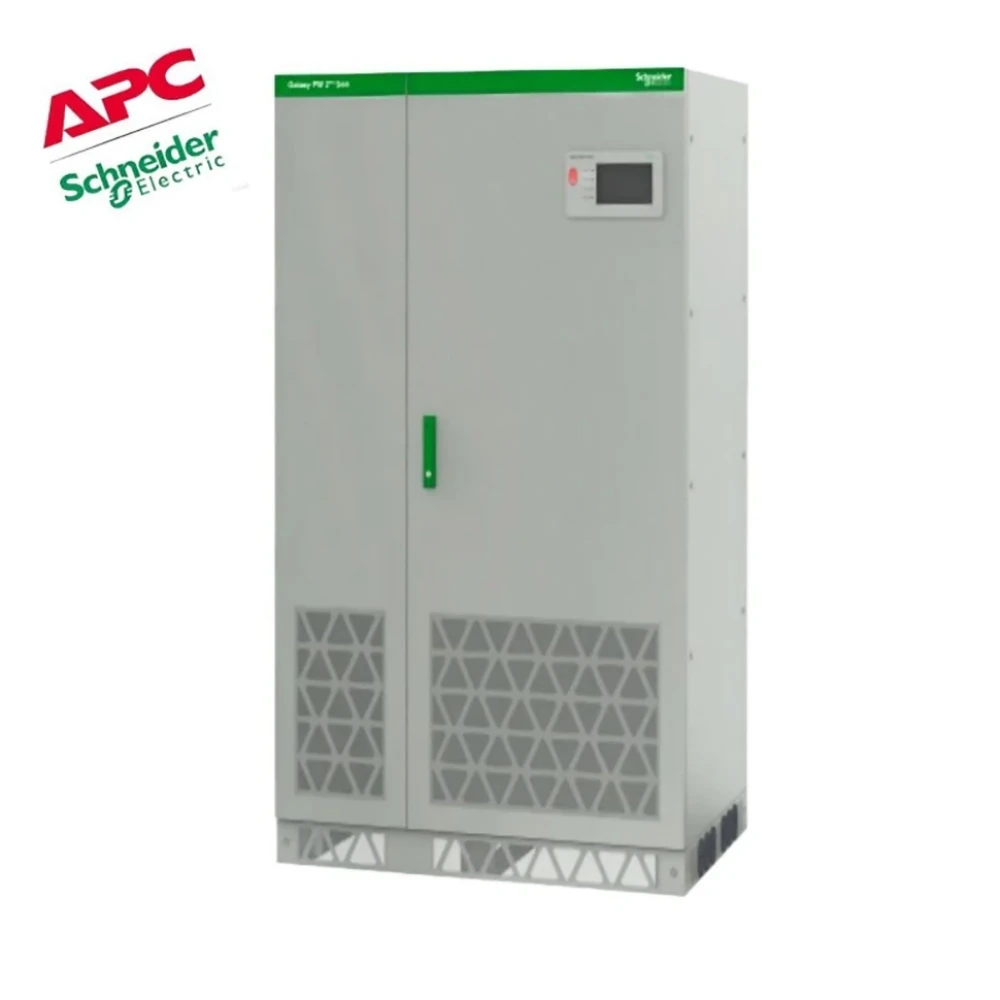
20kVA Three-Phase Online UPS for Industrial Applications
The APC Galaxy PW33 supports 3:3 phase input and output configuration with a nominal 384V DC architecture.
Its three-phase design makes it suitable for industrial applications requiring stable power protection for critical systems.
For users searching for a 20kVA online UPS solution, this model combines industrial power capacity with advanced UPS technology.
IP31 Protection and Three-Proof Coated PCB Design
The APC Galaxy PW33 features an IP31 protection level, helping protect internal components against solid particles larger than 2.5mm and vertical water drops.
In addition, its PCB boards use Three-Proof Coating technology designed to protect against moisture, salt spray, and dust-related corrosion.
These features improve the UPS’s adaptability in industrial environments where environmental conditions may affect equipment reliability.
384V DC Architecture and Stable Power Output
The UPS uses a 384V DC architecture designed for efficient energy storage and discharge.
With pure sine wave output and online double conversion technology, the APC Galaxy PW33 provides stable power protection for industrial equipment requiring reliable electricity.
Designed for Easy Maintenance in Industrial Environments
Industrial facilities often require fast maintenance and reduced downtime.
The APC Galaxy PW33 includes a front-access design that supports easier inspection and maintenance, helping improve service efficiency in continuous operation environments.
Conclusion: Choosing the Right Industrial UPS for Long-Term Reliability
Selecting the right industrial UPS system requires evaluating multiple factors, including power capacity, UPS topology, environmental protection, and application requirements.
For harsh environments, features such as IP protection, online UPS technology, double conversion design, and reliable component protection can help improve long-term system performance.
The APC Galaxy PW33 20kVA (EPWUPS20KH6PS) combines industrial-grade protection features with stable power technology, making it a suitable solution for critical infrastructure, manufacturing facilities, and other demanding industrial applications. If you are looking for a reliable industrial UPS solution for your specific application, contact our team today to discuss your power requirements and find the right configuration for your facility.