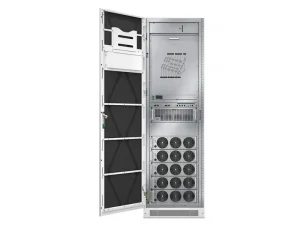
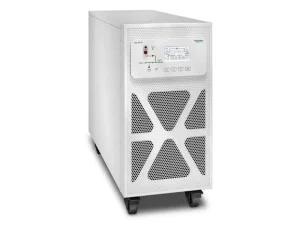
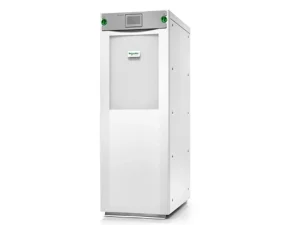
Understanding Smart Modular Rack Mount UPS Systems in Data Centers and Server Cabinets
1. Introduction: The Importance of Reliable Power in Modern IT Infrastructure
Modern data centers, enterprise server rooms, and network communication facilities all require a stable and uninterrupted power supply. Even a brief power outage can cause servers, network switches, and storage systems to malfunction. As IT infrastructure becomes more dense, traditional UPS designs face challenges related to space, maintenance, and scalability.
Intelligent modular rack-mount UPS systems have become a practical solution. With a compact design, hot-swappable modules, and remote management features, it is built to meet the unique demands of today’s data center environments.
2. What Is a Rack Mount UPS System
2.1 Definition of Rack Mount UPS
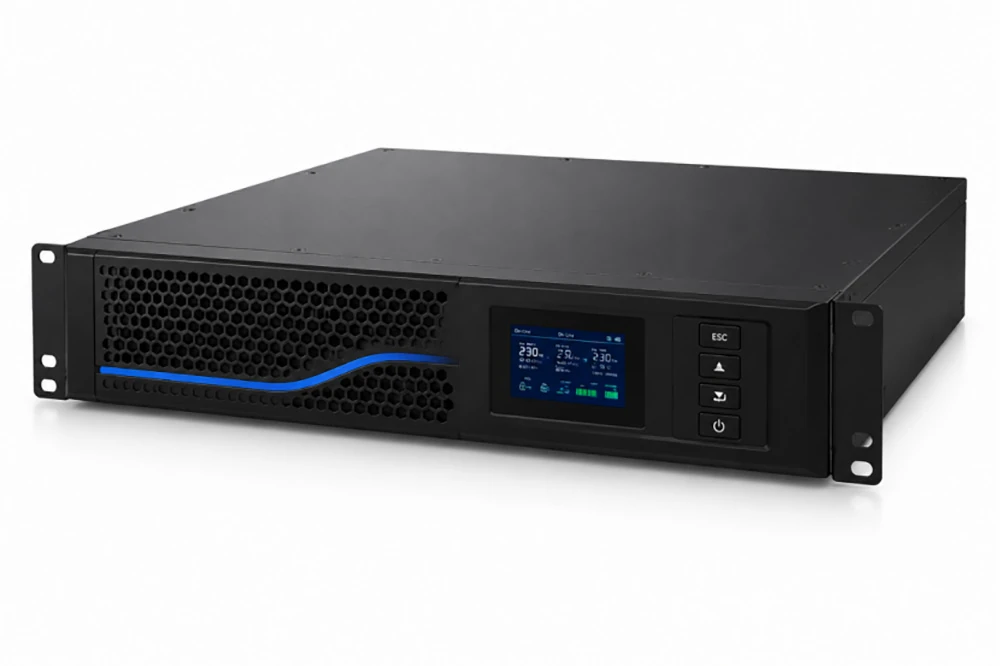
A rack mount UPS is an uninterruptible power supply designed to fit into standard 19-inch server cabinets. Unlike traditional tower UPS units that sit on the floor, rack mount models use a horizontal chassis. Common heights are 1U or 2U, matching the form factor of servers and network equipment.
2.2 How Rack Mount UPS Works in Server Cabinets
This rack-mounted UPS is installed next to IT equipment and can regulate the input power and switch to battery power mode within milliseconds after a power outage, thereby protecting the load from voltage drops, surges and power failures.
2.3 Why Rack Design Is Common in Data Centers
Space utilization efficiency is the primary consideration. Given that data centers strive to optimize every inch of floor space, rack-mounted UPS systems are designed to be installed within existing server racks, thus eliminating the need for dedicated floor space for UPS installation. This configuration further shortens the wiring distance of power cables and improves the flow of cooling air.
3. What Is a Modular UPS System
3.1 Basic Concept of Modular Power Architecture
Modular UPS systems use independent, swappable modules (power, battery, and control) — unlike traditional one-piece UPS designs.
3.2 How Modular UPS Systems Are Structured
In a modular rack-mount UPS, multiple power modules share the load. If one of them fails, the remaining devices can continue to operate—thus achieving redundancy without the need for an additional backup UPS.
3.3 Difference Between Modular and Traditional UPS Design
Traditional UPS systems require the entire device to be taken offline for maintenance or capacity upgrades. With modular UPS, you can replace faulty power modules without taking the system offline — thanks to hot-swappable design. This reduces downtime risk and simplifies maintenance.
4. What Does “Smart UPS System” Mean
4.1 Intelligent Monitoring and Control Functions
A smart UPS system includes built-in intelligence that continuously monitors input voltage, output voltage, load percentage, battery status, and system health. It can run self-tests and automatically adjust charging parameters.
4.2 Role of SNMP and Remote Management
Most smart rack mount UPS systems support SNMP (Simple Network Management Protocol) and Modbus communication protocols. With an SNMP card installed, the UPS becomes a network device. Administrators can remotely monitor power status, receive alerts, and adjust settings from a centralized dashboard.
4.3 Real-Time Data and Power Status Visibility
Administrators can view real-time metrics such as current load in kilowatts or percentage, estimated runtime, input voltage stability, and historical event logs. This visibility enables proactive maintenance — identifying battery or module issues before they cause an outage.
5. Why Data Centers Use Rack Mount UPS Systems
5.1 Space Efficiency in Server Racks
A 1U rack mount UPS occupies the same vertical space as a 1U server. Compared to traditional tower UPS units, rack mount designs save significant floor space. According to deployment data, rack mount UPS saves 50% of rack space compared to tower UPS, reducing data center floor area requirements and associated construction costs.
5.2 Stable Power Supply for Critical Equipment
Rack mount UPS systems provide stable, conditioned power to critical IT equipment. They protect against power sags, surges, spikes, and complete outages, ensuring servers and network devices continue operating without interruption.
5.3 Integration With IT Infrastructure
Rack mount UPS systems integrate naturally with existing IT infrastructure. They sit alongside servers in the same cabinets, connect to rack PDUs, and communicate via standard network protocols, making them a seamless fit for data center operations.
6. Modular UPS vs Traditional UPS Explained
6.1 Structural Differences Between the Two Systems
Traditional UPS systems are monolithic — a single enclosure contains all power and battery components. Modular UPS systems separate these functions into independent, replaceable modules within a shared chassis.
6.2 Scalability and Expansion Capability
With traditional UPS, users typically purchase full capacity upfront, which can lead to over-provisioning (wasted capital) or under-provisioning (future replacement). Modular UPS allows capacity to grow as load increases — simply add more power modules when needed.
6.3 Maintenance Complexity and Downtime Risk
Traditional UPS maintenance often requires bypassing or shutting down the entire unit. Modular UPS supports hot-swap module replacement. In rack mount designs, front-access maintenance is available — technicians can replace batteries and modules without removing the UPS from the cabinet, improving maintenance efficiency.
6.4 Efficiency and Energy Consumption Comparison
Rack mount modular UPS systems typically achieve 93–95% conversion efficiency. Compared to traditional tower UPS at the same load level, rack mount designs offer approximately 1–2% higher efficiency. In high-density data center environments, this difference translates into meaningful energy savings and reduced cooling requirements.
7. Key Specifications of Rack Mount Modular UPS
7.1 Form Factor and Efficiency
- Form factor: 1U or 2U rack mount chassis
- Conversion efficiency: 93–95%
- Maintenance: Hot-swappable modules, front-access design for battery and module replacement
7.2 Certifications
Reliable rack mount UPS products carry multiple international certifications. Based on actual product certifications, these include CE, UL, FCC, RoHS, and IEC standards, as well as ISO 9001, ISO 14001, and ISO 45001 management system certifications.
7.3 Core Component Technology
Compact rack mount UPS designs integrate intelligent monitoring chips directly on power modules. These chips monitor operational status and communicate with the central controller. Support for SNMP and Modbus protocols allows seamless integration with existing data center management systems.
8. Where Rack Mount UPS Systems Are Commonly Used
Based on actual deployment data, rack mount modular UPS systems are deployed in the following environments:
Data center cabinets: 50% of deployments
Enterprise server rooms: 30% of deployments
Network communication equipment rooms: 15% of deployments
Other applications (industrial, financial IT systems, etc.): 5% of deployments
This distribution reflects the strong alignment between rack mount UPS features — space efficiency, remote monitoring, and modular redundancy — and the requirements of high-density IT environments.
9. How Modern UPS Systems Are Evolving
9.1 Shift Toward Modular Architecture
The industry continues moving away from monolithic UPS designs. New data center builds increasingly specify modular, rack mount form factors. This shift is driven by the need for flexible power capacity that can grow with IT loads.
9.2 Increasing Demand for Smart Monitoring
SNMP and Modbus are becoming baseline requirements rather than optional features. Data center operators expect UPS systems to integrate with infrastructure management tools and support remote monitoring capabilities.
9.3 Energy Efficiency Trends in Data Centers
With power usage effectiveness (PUE) under continuous scrutiny, every percentage point of UPS efficiency matters. The 1–2% efficiency advantage of rack mount modular UPS over traditional designs translates into real energy and cooling savings at scale.
10. Industry Expertise: Beijing Appleton Technology Development Co., Ltd.
We are a high-tech enterprise integrating R&D, sales, and promotion, specializing in UPS uninterruptible power supplies, portable power supplies, and lithium batteries. As a senior agent for Eaton UPS and APC UPS in China, the company has deep industry experience and a top design team capable of delivering personalized custom solutions. The company serves partner customers in over 50 countries, including the USA, Canada, UK, Germany, Australia, and Chile. With highly competitive pricing and professional technical support, Appleton is committed to providing global customers with reliable modular UPS solutions.
11. Conclusion: The Role of Smart Modular UPS in Future IT Systems
Intelligent modular rack-mount UPS systems have become the practical standard for modern data centers. Their combination of space efficiency (1U/2U form factor) , energy performance (93–95% efficiency) , intelligent monitoring (SNMP/Modbus) , and serviceability (hot-swappable modules with front access) directly addresses the challenges faced by today’s IT infrastructure teams.
For organizations evaluating power protection strategies, existing evidence clearly points to a modular rack architecture—which offers greater space utilization, higher efficiency, and easier maintenance compared to traditional solutions.
Whether equipping a new data center, upgrading a server room, or standardizing network closet power protection, smart modular rack mount UPS systems offer a proven, future-ready solution. If you are interested in modular UPS systems, please feel free to contact us for more information and a quote.
12. FAQ: Smart Modular Rack Mount UPS Systems
Q1: How does a rack mount UPS work?
A rack mount UPS fits into a standard 19-inch cabinet, conditions utility power, and switches to battery backup during outages — protecting connected IT equipment.
Q2: Why are modular UPS systems used in data centers?
Data centers use modular UPS for three primary reasons: space efficiency (mounting directly in racks), scalability (adding modules as needed), and reduced downtime risk (hot-swapping failed modules).
Q3: What is the advantage of smart UPS monitoring systems?
Smart UPS systems with SNMP/Modbus enable remote real-time monitoring, proactive alerting, and seamless integration with data center infrastructure management tools — dramatically reducing the need for manual checks.
Q4: What certifications should a reliable rack mount UPS have?
Look for CE, UL, FCC, RoHS, and IEC certifications, along with ISO 9001, ISO 14001, and ISO 45001 management system certifications.