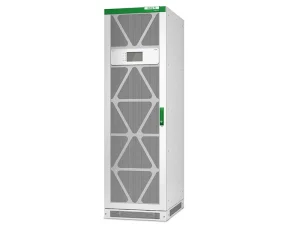
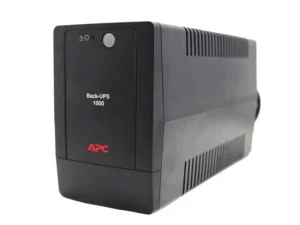
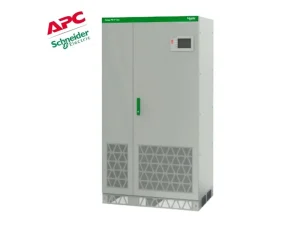
What Is an Online UPS? Benefits, Working Principle, and Applications
1.Introduction
Unlike offline or line-interactive systems, it always runs the load from the inverter. Incoming AC power is converted to DC, then back to AC. This double-conversion process isolates sensitive equipment from all grid disturbances: surges, sags, frequency variations, harmonics, and noise.
Key characteristics of an online UPS:
Zero transfer time (no handover delay)
Pure sine wave output
Voltage and frequency independent (VFI) operation
Continuous power conditioning
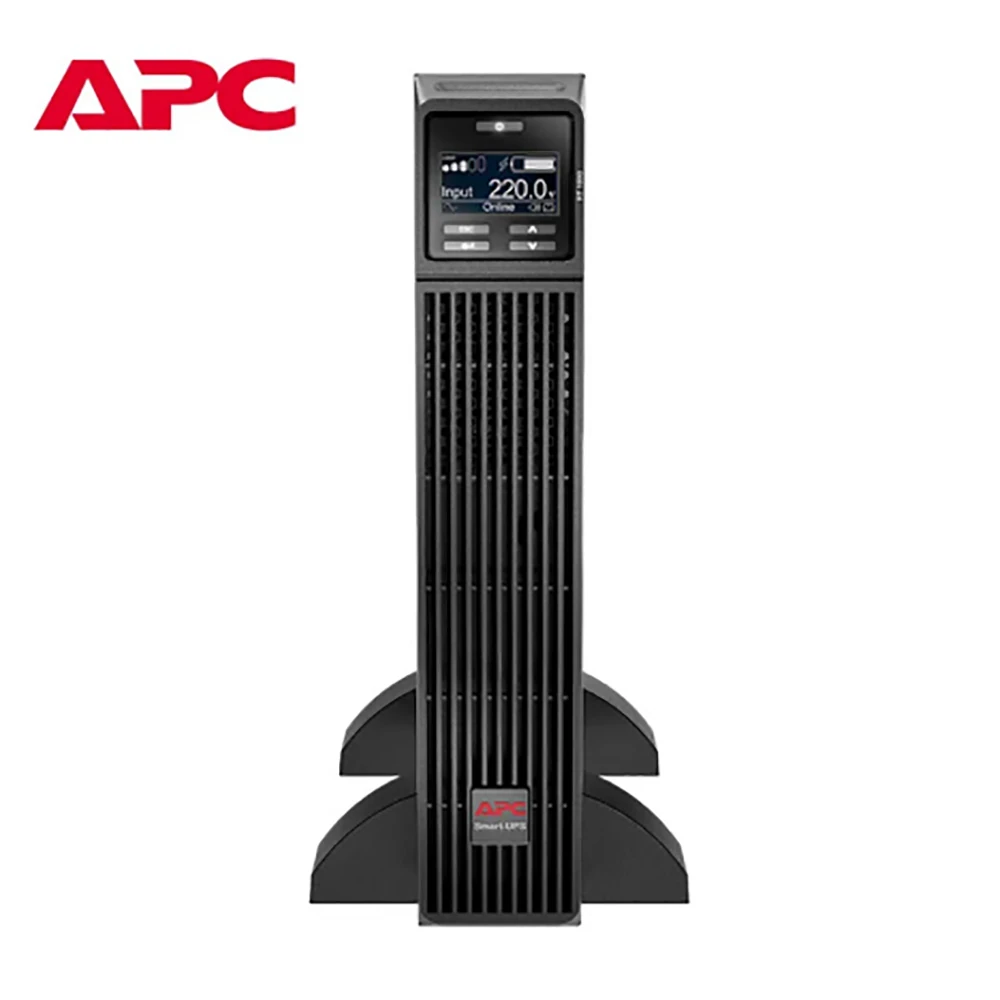
2. How Does an Online UPS Work? – Working Principle Explained
The Double-Conversion Process
An online UPS operates in four primary states:
Normal Mode – The rectifier converts AC to DC while charging the battery; the inverter converts DC back to clean, regulated AC for the load.
Battery Mode – If the mains power fails, the inverter will continue to receive DC power directly from the battery, so there is no switching delay.
Battery Recharge Mode – When utility power returns, the rectifier resumes charging the battery while continuing to power the inverter.
Static Bypass Mode – If the UPS requires maintenance or is overloaded, the static bypass switch will automatically switch the load to AC power, thus maintaining uninterrupted operation.
3. Key Benefits of an Online UPS for Critical Applications
Zero Transfer Time – No Data Loss, No Interruption
Offline and line-interactive UPS systems require 2–10 milliseconds to switch to battery power. While this is acceptable for many devices, sensitive equipment may reset or malfunction during that brief interruption.
Online UPS provides true zero transfer time because the inverter is always powering the load. When utility power fails, only the DC source changes – the inverter never stops.
Pure Sine Wave Output – Protecting Sensitive Equipment
Online UPS outputs a pure sine wave — as good as or better than mains power. Backup or offline UPS units often produce square or simulated sine waves, causing:
- Overheating of motor drive equipment
- Malfunction of power factor correction circuits
- Reduced efficiency and shortened equipment lifespan
Voltage and Frequency Independence (VFI)
With double-conversion technology, the output voltage and frequency are completely independent of the input. This is critical for:
- Compatible with generators, including those with unstable or fluctuating output
- Industrial sites with poor grid quality
- Marine and remote installations
Longer Equipment Lifespan – Reducing B2B Maintenance Costs
By continuously supplying clean, regulated power, an online UPS eliminates harmonic distortion, voltage spikes, and frequency drift. This reduces stress on connected equipment, lowering failure rates and extending service life.
As noted in industry comparisons, the fully digital control of modern online UPS systems reduces mechanical wear, with core module life reaching 12 years – approximately 4 years longer than typical offline UPS units.
Wide Input Voltage Range – Adapting to Unstable Grids
Online UPS systems are designed to handle wide input voltage fluctuations without draining the battery. This reduces battery cycling, extending battery life and reducing replacement frequency.
4. Typical Applications of Online UPS (With Industry Examples)
Based on market data, online UPS is widely used in three primary B2B sectors:
| Industry | Approximate Share | Why Online UPS Is Required |
| Research Laboratories | 30% | Eliminate harmonics for precise measurements |
| Broadcasting & TV Stations | 25% | Zero interruption for live transmissions |
| Financial Trading Systems | 20% | Prevent transaction failures from power sags |
Research Laboratories – Eliminating Harmonics for 99.9% Data Accuracy
Scenario: A research laboratory operates high-precision analytical instruments that are extremely sensitive to grid harmonics and voltage noise.
Challenge: Utility power in many industrial areas contains harmonic distortion that corrupts sensitive measurements, leading to inconsistent experimental data.
Solution: An online UPS with double-conversion topology provides completely isolated, pure sine wave power to all critical instruments.
Result: The laboratory achieved 99.9% data accuracy by eliminating power-related measurement errors. Grid disturbances no longer affect experimental outcomes.
Broadcasting & TV Stations – Protecting Live Broadcasts from Voltage Sags
Scenario: A television broadcaster needs uninterrupted power for live news production and transmission equipment.
Challenge: Voltage sags (dips) as short as 50 milliseconds can cause broadcast servers to reboot, resulting in on-air blackouts.
Solution: Online UPS with built-in Dynamic Voltage Restorer (DVR) compensates for voltage sags in less than 2 milliseconds – well before the load detects any disturbance.
Result: The broadcaster eliminated all power-related transmission interruptions, maintaining 100% on-air reliability.
Financial Trading Systems – Zero Downtime for Transaction Integrity
Scenario: A financial trading firm operates servers that process thousands of transactions per second.
Challenge: Any power interruption – even a few milliseconds – can cause transaction failures, data corruption, or order execution delays with significant financial consequences.
Solution: Rack-mounted online UPS units deployed at each server cabinet, providing zero-transfer-time protection.
Result: The trading system achieved continuous operation through multiple grid disturbances, with no lost transactions or corrupted data.
Additional Applications
Beyond the top three industries, online UPS is also commonly deployed in:
Data centers and server rooms
Medical equipment (MRI, CT scanners, patient monitoring)
Telecommunications infrastructure
Industrial automation and process control
Airport navigation and security systems
5. Online UPS vs Line-Interactive vs Offline UPS – A Quick Comparison
| Feature | Online UPS | Line-Interactive UPS | Offline (Backup) UPS |
| Transfer Time | Zero | 2–6 ms | 6–10 ms |
| Output Waveform | Pure Sine Wave | Pure or Simulated Sine Wave | Square / Simulated Sine Wave |
| Voltage Regulation | Continuous (VFI) | Stepped boost/buck | None (passes raw power) |
| Typical Efficiency | 90–96% | 95–98% | 96–99% |
| Best For | Sensitive, mission-critical equipment | Servers, networking, POS systems | Printers, monitors, basic PCs |
| Relative Cost | Highest (approx. 30% higher than offline) | Medium | Lowest |
Key takeaway: While an online UPS has a higher initial cost (approximately 30% more than an offline UPS), the zero transfer time and pure sine wave output are essential for sensitive equipment. For non-critical loads, offline or line-interactive UPS may be sufficient.
6. Why Choose Beijing Appleton Technology as Your Online UPS Supplier
Beijing Appleton Technology Development Co., Ltd is a high-tech enterprise integrating R&D, sales, and promotion in the UPS industry. Since its inception, the company has been committed to providing global customers with:
High-quality online UPS systems
Portable power supplies
Maintenance-free batteries
Lithium batteries and related UPS products
Key qualifications:
Senior agent for Eaton and APC in China
Top-tier design team for customized solutions
ISO 9001, ISO 14001, and ISO 45001 management certifications (since 2013)
Product certifications include CE, RoHS, FCC, and IEC
Global presence:
Partner customers in more than 50 countries, including:
USA, Canada
UK, France, Germany
Australia
Colombia, Chile, Türkiye
Why B2B buyers choose Beijing Appleton:
Professional technical support from an experienced engineering team
Competitive pricing with genuine Eaton/APC components
Full certification compliance for international shipping
Customization capabilities for unique project requirements
7. Frequently Asked Questions (FAQ) About Online UPS
Q1: Is online UPS better than line-interactive UPS?
A: For sensitive equipment such as laboratory instruments, broadcast servers, and medical devices, yes. Online UPS provides zero transfer time and pure sine wave output, while line-interactive UPS typically has a 2–6 ms transfer time and may produce simulated sine waves under battery power.
Q2: Does online UPS consume more electricity?
A: Online UPS typically operates at 90–96% efficiency, which is slightly lower than line-interactive or offline UPS. However, the higher power quality reduces equipment failures and data loss, often resulting in lower total cost of ownership for critical applications.
Q3: How long does an online UPS battery last?
A: Under normal conditions, online UPS batteries last 3 to 5 years, depending on ambient temperature, discharge cycles, and load rate. Keeping the load between 40–60% of rated capacity and maintaining proper ventilation will extend battery life.
Q4: How do I choose the right UPS capacity?
A: Select a UPS capacity that is 1.2 to 1.5 times the total load power. For example, if your equipment draws 5kW, choose a UPS rated between 6kVA and 7.5kVA. This 20–50% redundancy ensures the UPS operates at an optimal load rate (40–60%) and allows for future expansion.
Q5: What certifications should I look for in an online UPS?
A: For international B2B purchases, verify that the online UPS carries:
CE (2014/35/EU for Europe)
UL (for North America)
CB (international safety certification)
TUV and EAC (for premium and Russian/Eurasian markets)
Additionally, look for ISO 9001, ISO 14001, and ISO 45001 certified online ups manufacturers.
8. Conclusion
An online UPS is more than just a backup power device – it is a critical investment for any organization that cannot afford power-related disruptions, data loss, or equipment damage.
For B2B buyers in research laboratories, broadcasting, financial trading, data centers, and medical facilities, the zero transfer time, pure sine wave output, and voltage/frequency independence of a double-conversion online UPS provide protection that offline or line-interactive systems simply cannot match.
While the upfront cost of an online UPS is approximately 30% higher than basic offline units, the long-term benefits – including a 12-year core module lifespan, reduced equipment failure rates, and elimination of costly downtime – make it the most reliable choice for mission-critical applications.
Beijing Appleton Technology Development Co., Ltd, with its decade of experience, Eaton/APC senior agency, ISO certifications, and global export reach to over 50 countries, stands ready to support your online UPS project – from standard specifications to fully customized solutions.
Protect your critical equipment. Choose online UPS. Choose Beijing Appleton.