UPS vs. Generator: Which Backup Power Solution Does Your Facility Need?
Reliable power is essential for businesses that depend on computers, servers, communication networks, industrial equipment, and other electrical systems. Even a brief power interruption can disrupt operations, interrupt services, or cause unexpected equipment shutdowns. For facilities where continuous operation matters, having a reliable backup power system is an important part of infrastructure planning.
Two common backup power solutions are uninterruptible power supply (UPS) systems and generators. Although both provide power when the main utility supply is unavailable, they serve different purposes and operate in different ways. Understanding the differences between them helps businesses determine which solution is suitable for their equipment, operating requirements, and backup power strategy.
1. What Is a UPS Power Supply?
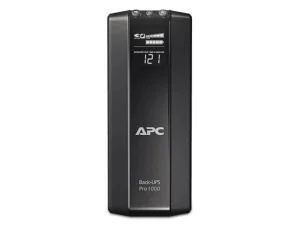
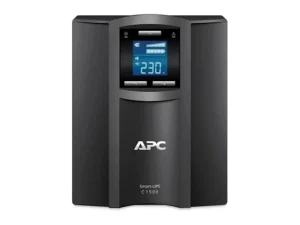
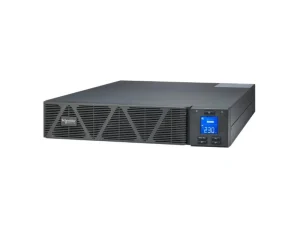
An uninterruptible power supply (UPS) is an electrical device designed to provide backup power to connected equipment when the utility supply fails or experiences certain power disturbances. Unlike conventional backup generators, a UPS can supply power from its batteries almost immediately when an interruption occurs, helping prevent connected equipment from shutting down unexpectedly.
A typical UPS system consists of power conversion components, a control system, and an energy storage system, usually batteries. Depending on its topology, a UPS can also help protect connected equipment against voltage fluctuations, electrical disturbances, and other power quality problems.
There are several common UPS types, including offline, line-interactive, and online UPS systems. Online UPS systems use double conversion technology to provide a continuously conditioned power supply to connected loads, making them suitable for equipment that requires a high level of power protection, such as servers, networking equipment, and critical IT infrastructure.
A UPS power supply is particularly useful when equipment cannot tolerate even a short interruption during the transition from utility power to backup power. However, its backup duration depends on battery capacity, connected load, battery condition, and system configuration. A UPS is generally intended to provide temporary power rather than serve as a long-duration energy source for an entire facility.
2. What Is a Generator and How Does It Work?
A generator is a backup power device that converts mechanical energy into electrical energy. In commercial and industrial facilities, generators are commonly powered by diesel, natural gas, or other fuels, depending on the system design.
When the utility power supply fails, an automatic transfer switch (ATS) or another control arrangement can detect the interruption and initiate generator startup. Once the generator reaches the required operating conditions, the system can transfer designated loads to generator power.
Unlike a UPS, which relies on stored electrical energy in batteries to supply power during an interruption, a generator produces electricity through mechanical operation. This allows it to support loads for extended periods, provided fuel is available and the generator can operate within its rated capacity.
Generators are commonly used in hospitals, commercial buildings, industrial facilities, telecommunications infrastructure, and data centers where prolonged power outages could affect essential operations.
However, generators typically require time to start and stabilize before they can supply connected loads. They also require fuel management, periodic testing, servicing, and appropriate installation space. These factors need to be considered when planning a backup power system.
3. UPS vs. Generator: Key Differences
UPS systems and generators serve different functions in a backup power arrangement. A UPS is designed to provide immediate power continuity and electrical protection, while a generator is generally intended to provide backup power for longer periods.
| Comparison | UPS System | Generator |
| Backup power source | Batteries or other energy storage | Fuel-powered engine |
| Response to power failure | Battery power is supplied almost immediately | Requires startup and stabilization |
| Typical backup duration | Limited by battery capacity and load | Can operate for extended periods with sufficient fuel |
| Main purpose | Power continuity and protection | Longer-duration backup power |
| Power quality | Depends on UPS topology; online UPS provides conditioned output | Depends on generator design, operating conditions, and regulation |
| Maintenance | Battery inspection, system testing, and equipment servicing | Engine servicing, fuel management, testing, and mechanical maintenance |
| Common applications | Servers, IT equipment, control systems, and sensitive loads | Facilities, industrial equipment, buildings, and large backup loads |
The main difference is not simply their capacity or output power. It is how each system responds to a power failure and how long it can support the connected equipment.
A UPS helps bridge the interruption and protects sensitive loads during the transition. A generator provides a longer-term source of electricity after it starts operating. For facilities with critical power requirements, these functions may be more effective when used together rather than treated as competing solutions.
4. UPS vs. Generator: Which One Should Your Facility Choose?
Choosing between a UPS and a generator depends on the facility’s power requirements, the type of equipment being protected, the expected duration of power interruptions, and the acceptable level of downtime.
When Should You Choose a UPS?
A UPS is a suitable choice when connected equipment needs immediate backup power or protection against electrical disturbances. Businesses that operate servers, network infrastructure, communication equipment, or sensitive electronic systems may require a UPS to maintain operation during a power interruption.
UPS backup power can also support controlled shutdown procedures. If utility power is lost and a generator is not available, the UPS can provide temporary power for equipment to save data, complete essential processes, or shut down safely.
A UPS may be the preferred solution when:
- Equipment cannot tolerate an interruption in power.
- Voltage disturbances may affect sensitive electronic devices.
- A brief backup period is sufficient to complete a safe shutdown.
- The facility needs a bridge between utility failure and generator availability.
When Should You Choose a Generator?
A generator is more suitable when a facility needs to maintain power for an extended period during a utility outage. It can support larger loads or multiple systems, depending on its rated capacity and electrical configuration.
Facilities such as manufacturing plants, hospitals, commercial buildings, and large infrastructure sites may require generators to keep essential operations running during prolonged outages.
A generator may be the preferred solution when:
- Power interruptions may last for hours.
- The facility needs to maintain operations instead of shutting down.
- The connected loads require more sustained energy than a typical UPS battery system can provide.
- Fuel availability and generator maintenance can be managed appropriately.
The decision should be based on the required backup duration, load characteristics, power quality needs, installation conditions, and operating budget rather than on equipment cost alone.
5. Why Many Facilities Use UPS and Generator Systems Together
For facilities with critical power requirements, a UPS and a generator are often complementary components of the same backup power system.
When utility power fails, the UPS battery backup immediately supplies connected critical equipment using its stored energy. Meanwhile, the generator starts and prepares to take over the designated loads. Once the generator is operating within the required conditions, the electrical system transfers power to the generator, allowing the facility to continue operating beyond the UPS battery runtime.
This arrangement helps address two different challenges: immediate power continuity and long-duration backup power.
A typical backup sequence works as follows:
- Utility power failure: The main power supply becomes unavailable.
- UPS battery operation: The UPS immediately supplies power to critical connected equipment.
- Generator startup: The backup generator starts and stabilizes.
- Load transfer: The facility’s transfer system switches designated loads to generator power when conditions are suitable.
- Continued operation: The generator provides power while the UPS continues to protect supported loads according to the system configuration.
This approach is common in environments where a brief interruption could affect IT services, production processes, or essential operations. The UPS bridges the gap during generator startup, while the generator provides a longer backup period.
The actual arrangement depends on system design, generator capacity, transfer equipment, UPS compatibility, load priorities, and facility requirements.
6. Product Spotlight: APC Galaxy VS 30kVA 30kW UPS
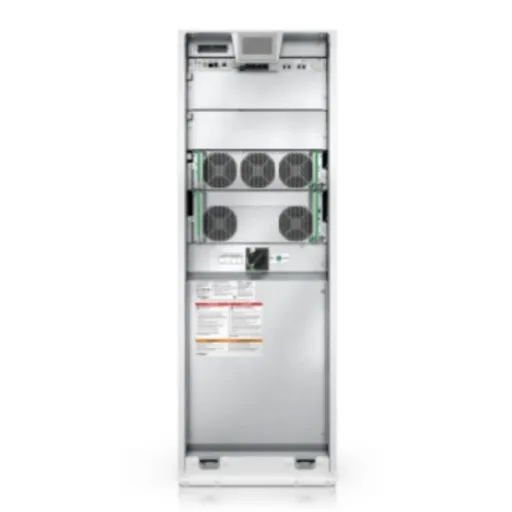
For facilities that need three-phase power protection for critical IT loads, the APC Galaxy VS 30kVA 30kW UPS (GVSUPS30KHS) is one option to consider within a generator-backed power infrastructure.
The GVSUPS30KHS is a 3:3 phase online double-conversion UPS rated at 30kVA / 30kW, with an output power factor of 1.0. It is designed for applications such as edge data centers, small and medium data centers, telecommunications facilities, commercial buildings, and industrial automation environments.
Its external battery configuration allows the backup battery system to be selected separately according to the facility’s runtime requirements. The system is compatible with traditional VRLA battery configurations and lithium-ion battery cabinets, providing flexibility for different installation and backup power planning needs.
Key specifications include:
- Rated power: 30kVA / 30kW
- Output power factor: 1.0
- Topology: Online double conversion / ECOnversion™
- Input and output: Three-phase input, three-phase output (3:3)
- Nominal input voltage: 380V / 400V / 415V
- Online efficiency: Up to 97%
- ECOnversion™ efficiency: Up to 99%
- Battery configuration: External battery system
- Input current harmonic distortion (THDI): Less than 3% at full load
The GVSUPS30KHS can be incorporated into a backup power arrangement where a generator provides extended power during outages and the UPS supports critical equipment during power interruptions and transitions. Its external battery configuration also allows backup runtime planning to be tailored to the installation.
For facilities evaluating a UPS backup power solution alongside a generator, the required load capacity, battery runtime, electrical compatibility, and operating environment should be assessed before selecting the equipment.
Conclusion
A UPS and a generator are designed to address different backup power requirements. A UPS provides immediate battery-based power and electrical protection when utility power fails, while a generator can supply electricity for a longer period after starting and stabilizing.
For facilities with critical equipment, combining both systems can provide a more complete backup power arrangement. The UPS supports connected loads during the initial interruption and generator startup, while the generator provides longer-duration power when an outage continues.
Selecting the right configuration requires understanding the facility’s loads, backup duration, power quality requirements, and operating conditions. With appropriate planning, businesses can build a backup power system that supports operational continuity and reduces the risk of unexpected downtime.
If your facility is evaluating UPS equipment for a generator-backed power infrastructure, contact our team to discuss your load requirements, battery runtime, and suitable UPS configuration.
FAQs
1. Can a UPS replace a generator?
No. A UPS provides immediate battery backup for short interruptions, while a generator is designed to supply power for longer outages. They serve different purposes and are often used together.
2. How long can a UPS provide backup power during an outage?
UPS runtime depends on battery capacity, connected load, battery condition, and system configuration. It typically provides temporary power until utility power returns, a generator takes over, or equipment can be safely shut down.
3. Can a UPS work with a diesel generator?
Yes. A UPS can operate in a generator-backed power system, provided the generator and UPS are properly sized and electrically compatible. Their voltage, frequency, capacity, and operating characteristics should be evaluated together.